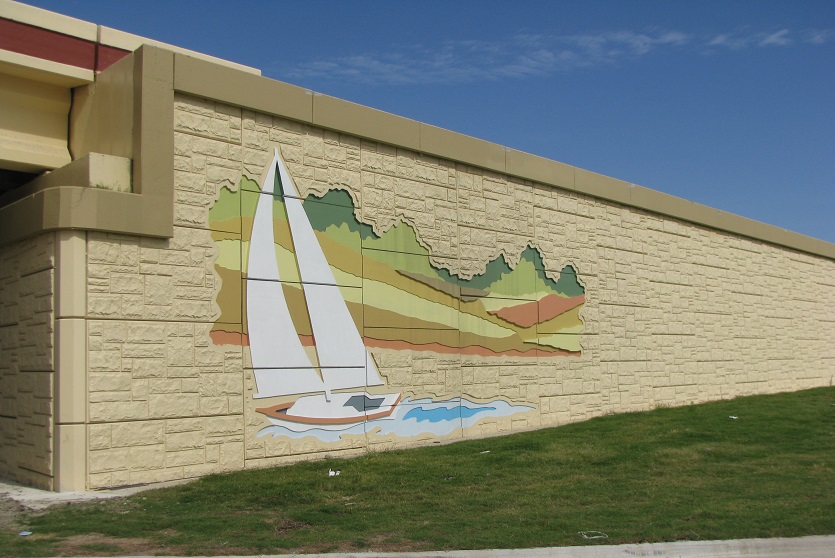
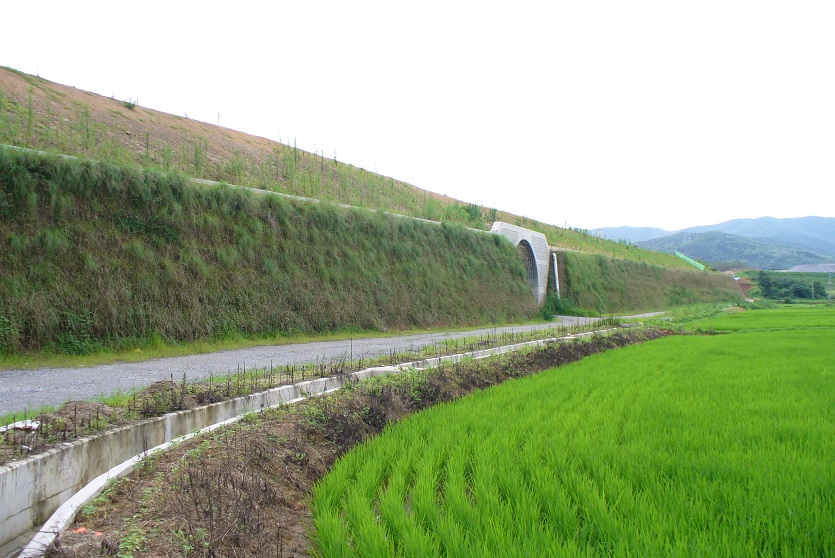
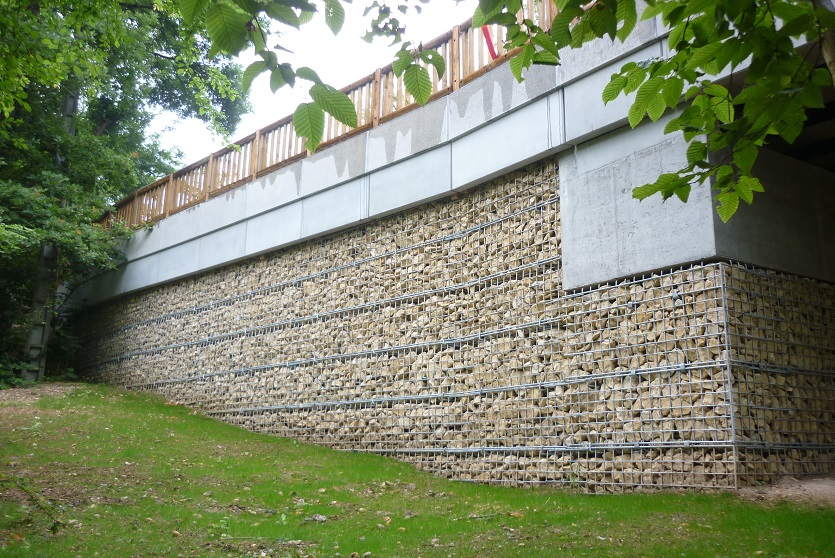
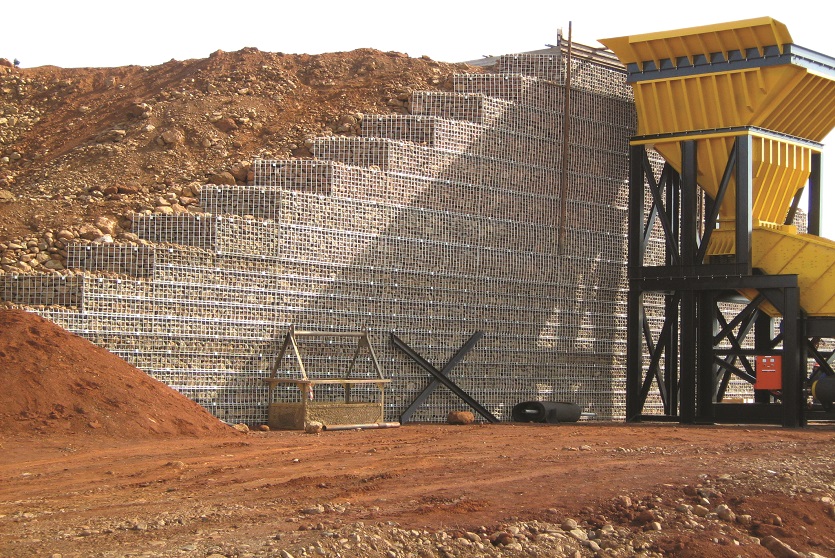
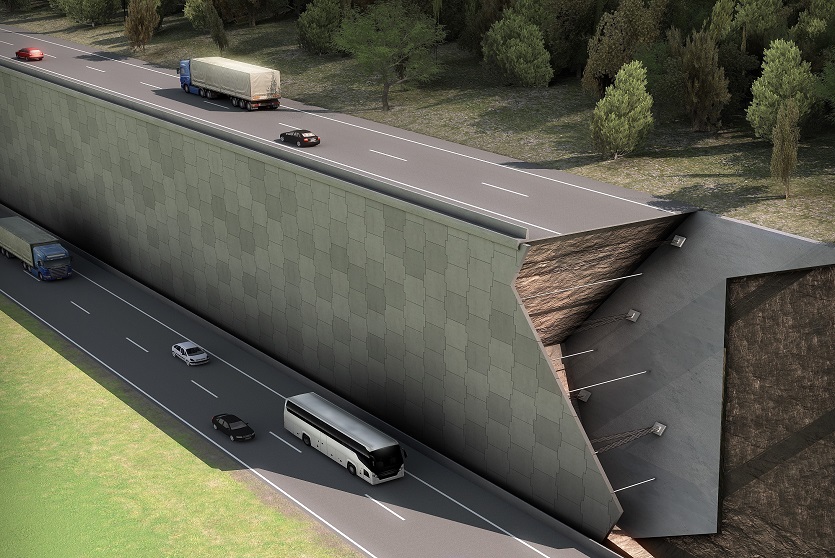
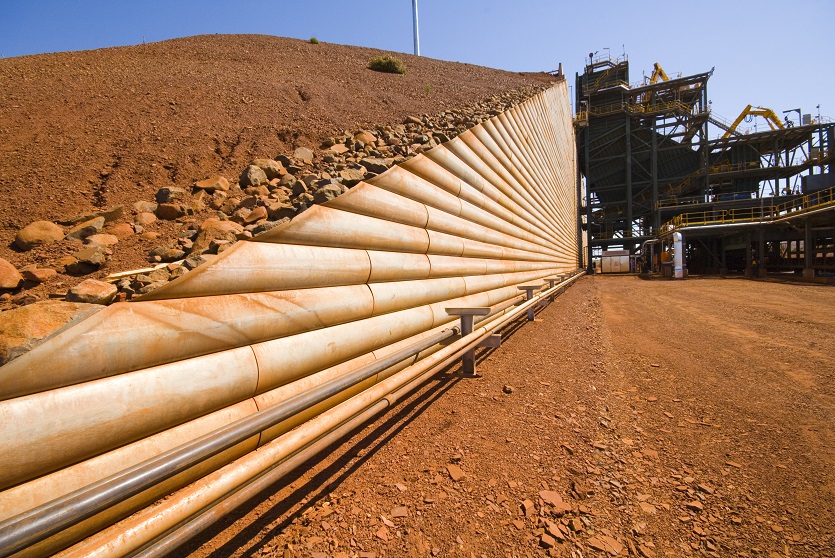
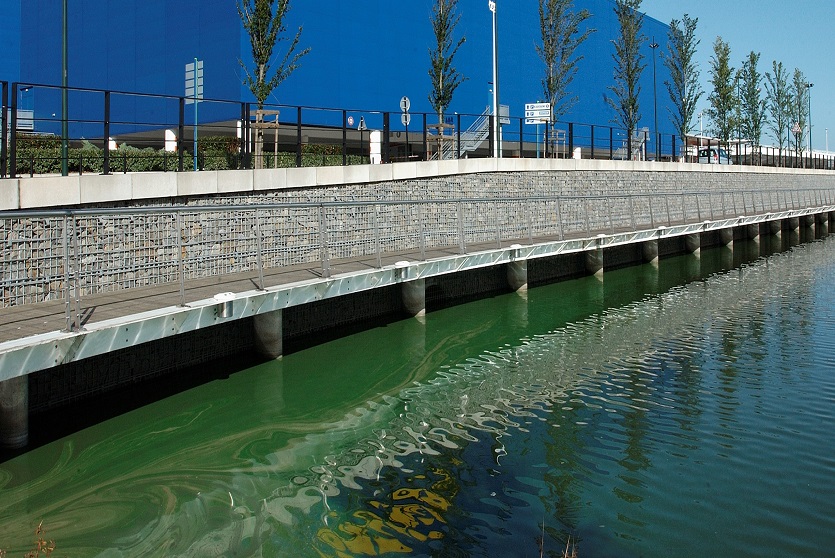
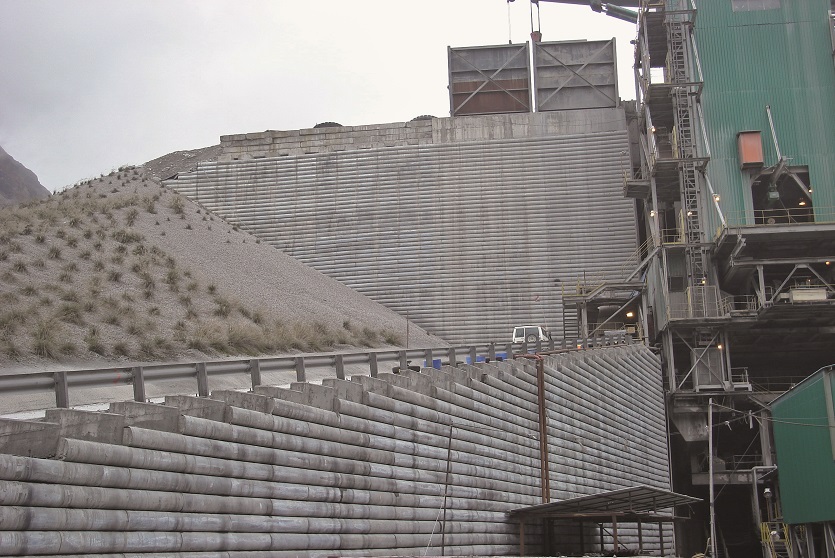
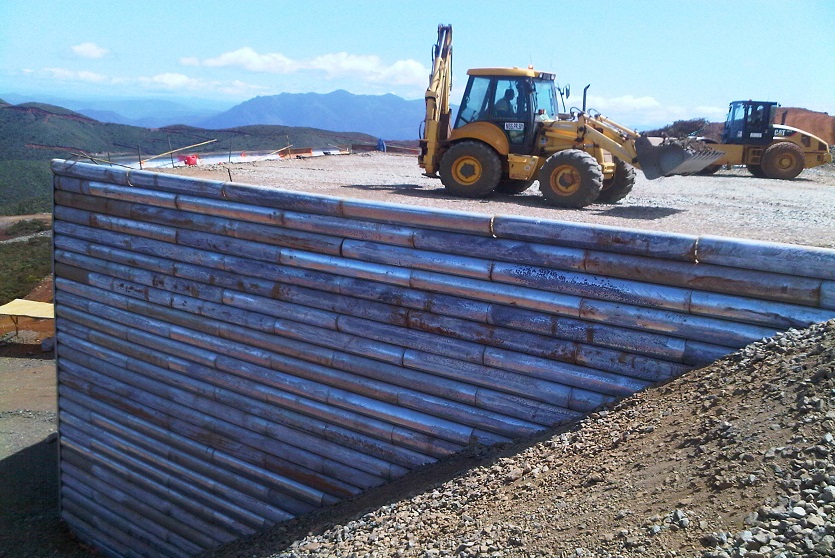
TerraMet MSE walls using steel facing panels.
The designs for thousands of Reinforced Earth mechanically stabilized earth (MSE) wall structures that have been built have their origins in the TerraMet solution.
Handling heavy and complex components
Adaptability to site constraints
Ensuring long-term durability
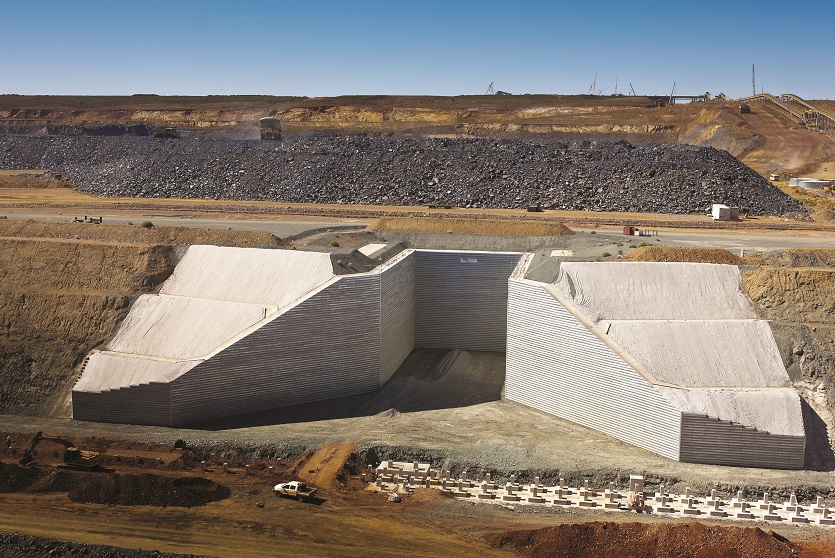
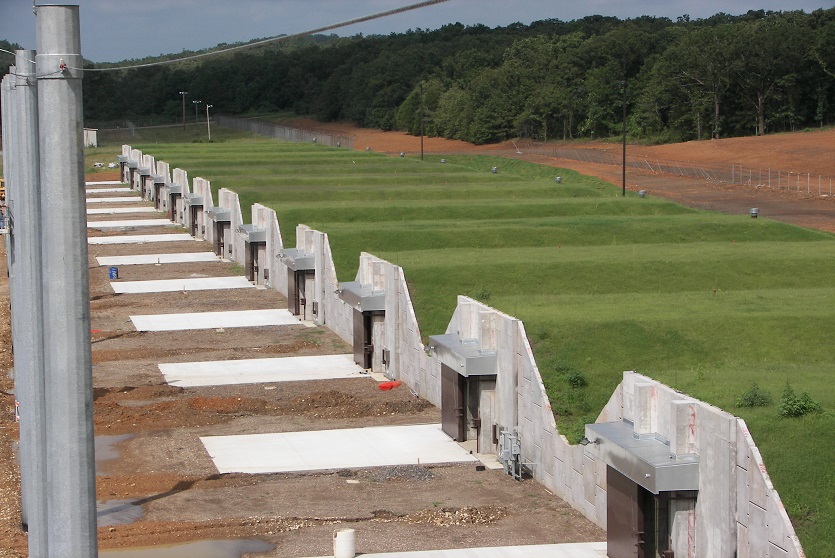
This original invention uses metallic, semi-elliptical, modular panels as facing. This technique predates the introduction of our concrete and mesh facings, and yet has been used extensively throughout the world since the first operational Geoquest retaining wall was constructed in 1964. TerraMet remains especially a preferred alternative for developing large mining and industrial sites as well as military-grade revetments.
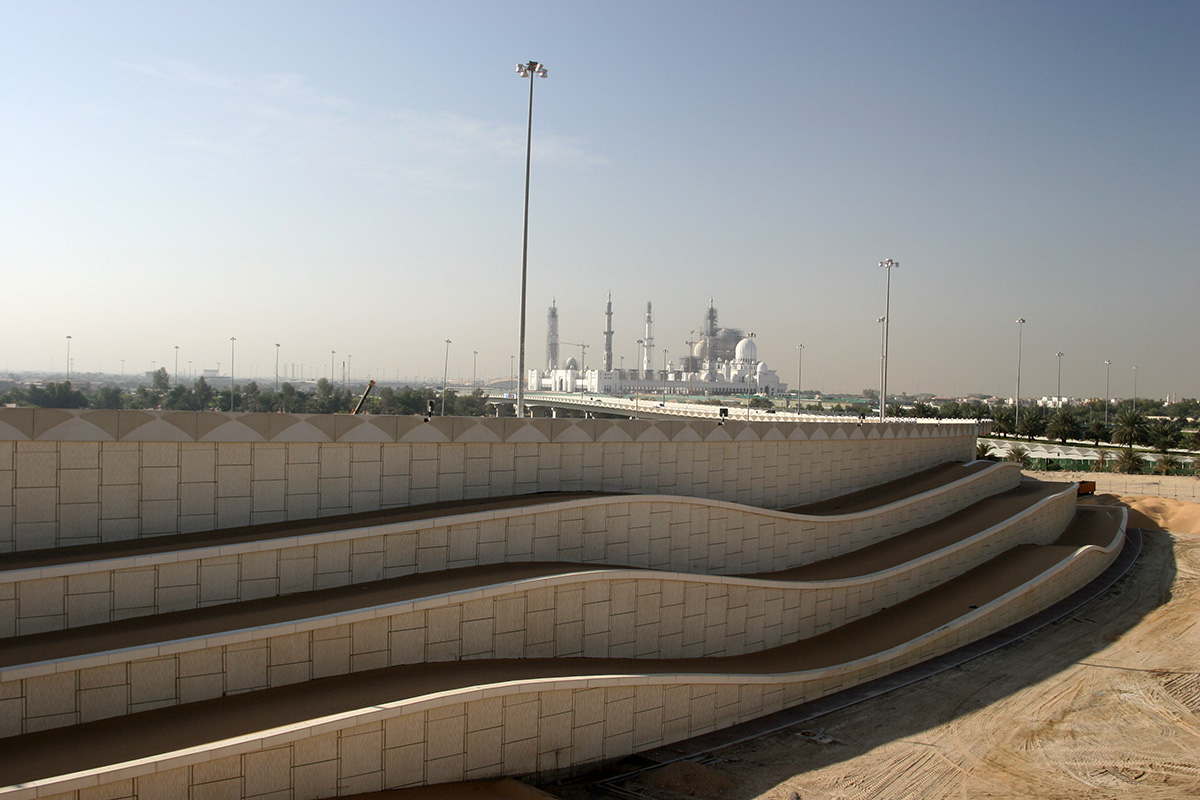
As with all Reinforced Earth retaining wall solutions, TerraMet combines facing elements, soil reinforcements and compacted engineered backfill that together build a durable mass gravity structure. These structures are capable of supporting their own weight at any practical height, together with the capacity to tolerate extreme applied loading, vibrations, settlement and external assault.
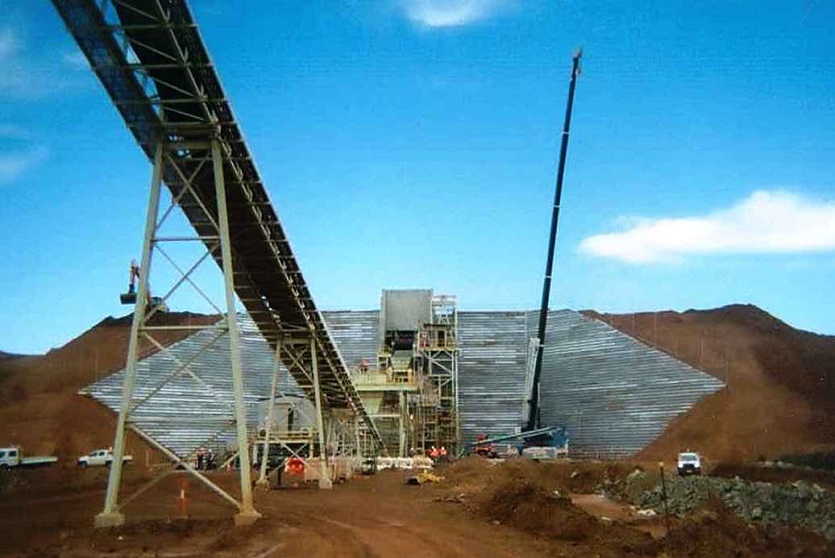
- Soil reinforcement
High-adherence (HA) steel strips are bolted to the facings panels along the horizontal panel joints at the pre-located slots. These non-extensible strips are designed for maximum structural capacity and durability. As opposed to other alternative reinforcements, Geoquest’s HA strips are flexible for designs that require skewing or deflecting around obstructions located within the reinforced soil volume. The HA strips and connection hardware may be galvanized or ungalvanized depending on design life requirements and environmental influences.
- Select backfill
While project-specific technical specifications and local building codes will normally govern your selection for backfill, a general specification will call for cohesionless granular soils with suitable properties to ensure proper pullout capacity and durability. Factors including unit weight, friction angle, gradation, soundness and electrochemical properties are to be considered.
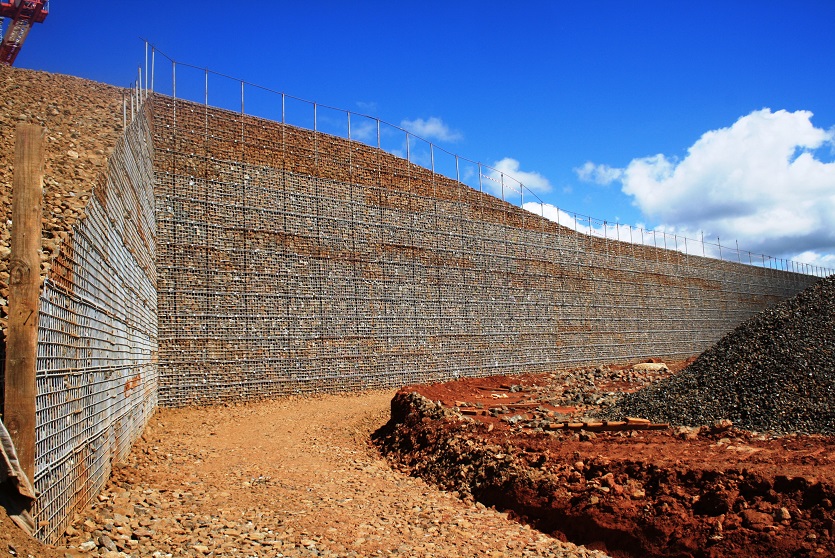
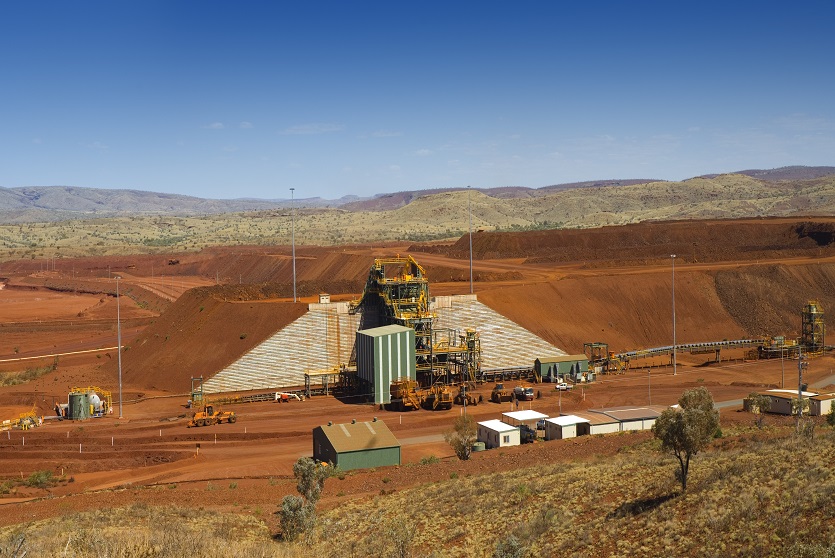
Our solutions allows:
Ease in handling
Lightweight components that are easy to stack, transport, handle and quickly install without heavy lifting equipment.
Flexibility
The inherent flexibility of the composite structure is designed to tolerate subgrade deformations.
Resilience
Perfect for both temporary and permanent structures subject to impact and vibrations, for instance industrial and military applications.
Our solutions suit severall applications to: RetainCrossProtectStrengthen
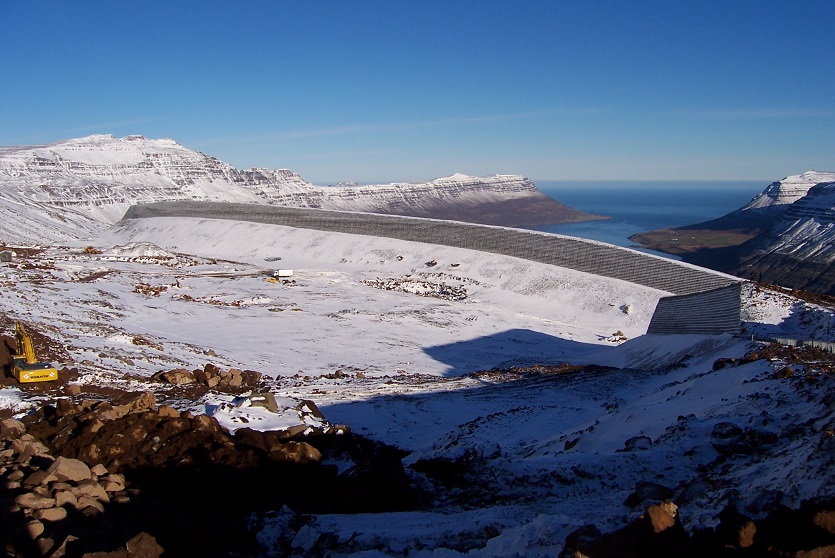
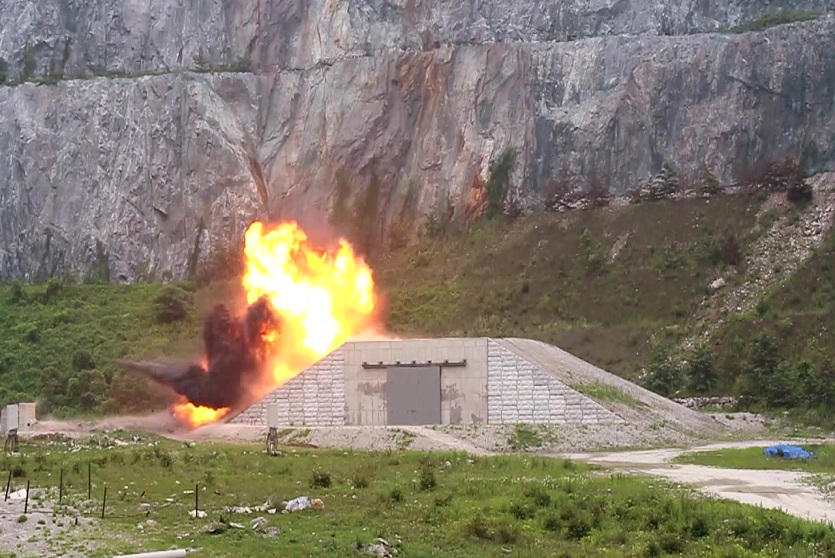
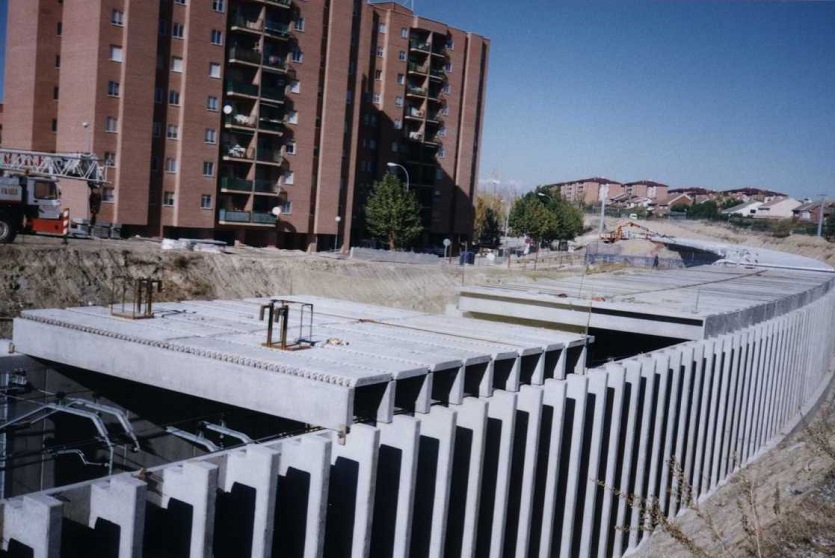
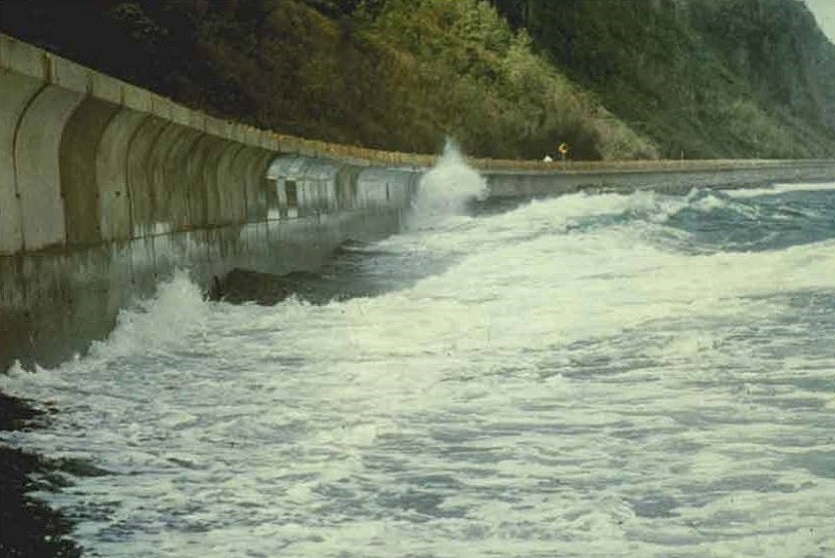
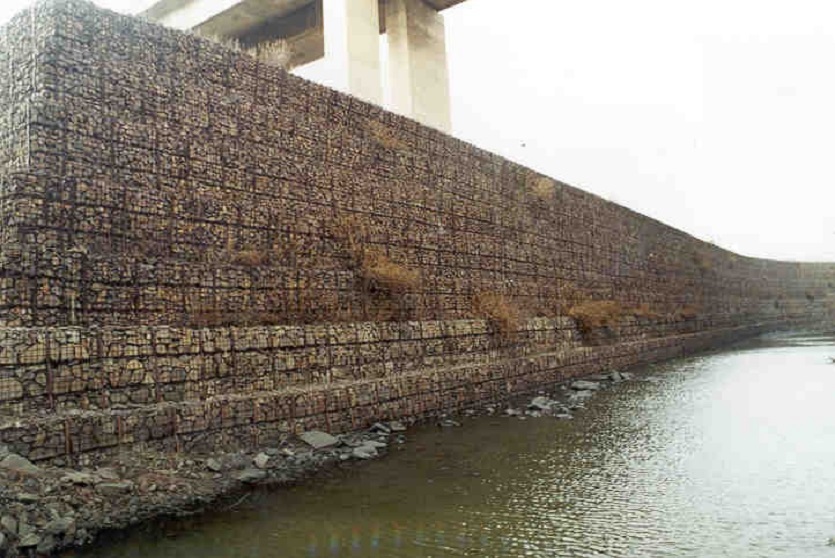
Protection of marine structures and pipelines
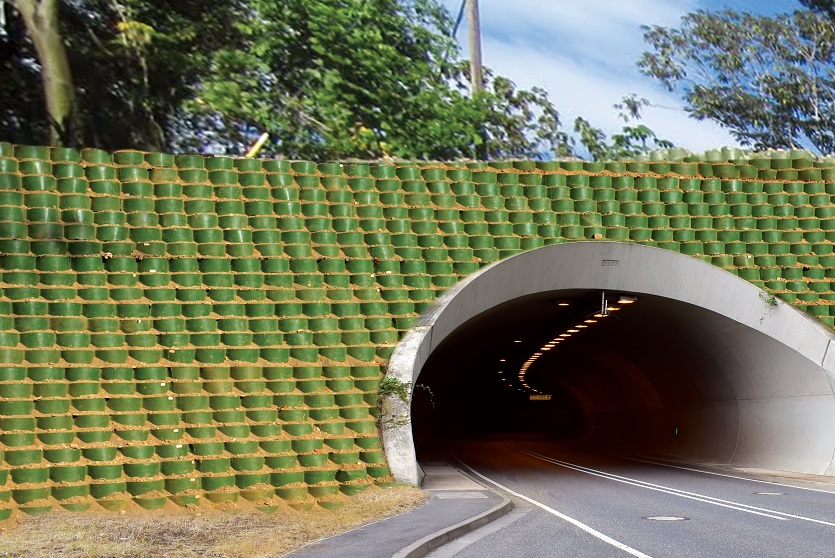
Reinforced Earth solutions