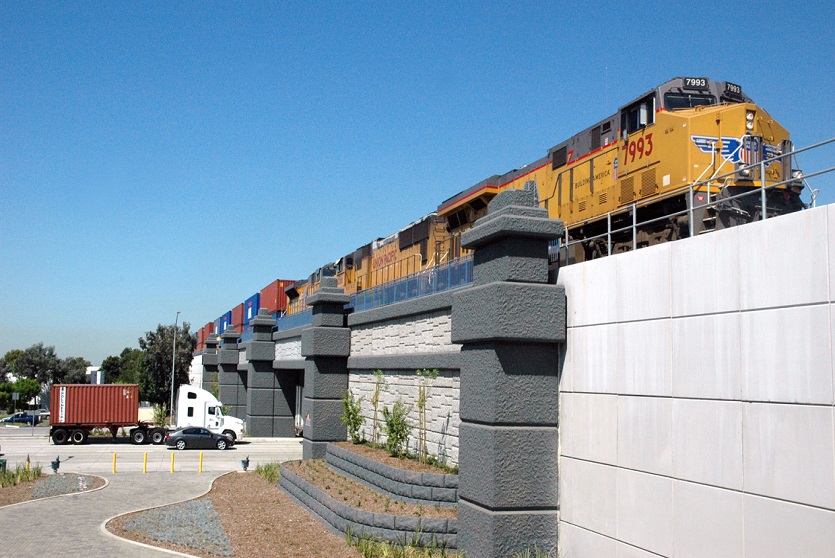
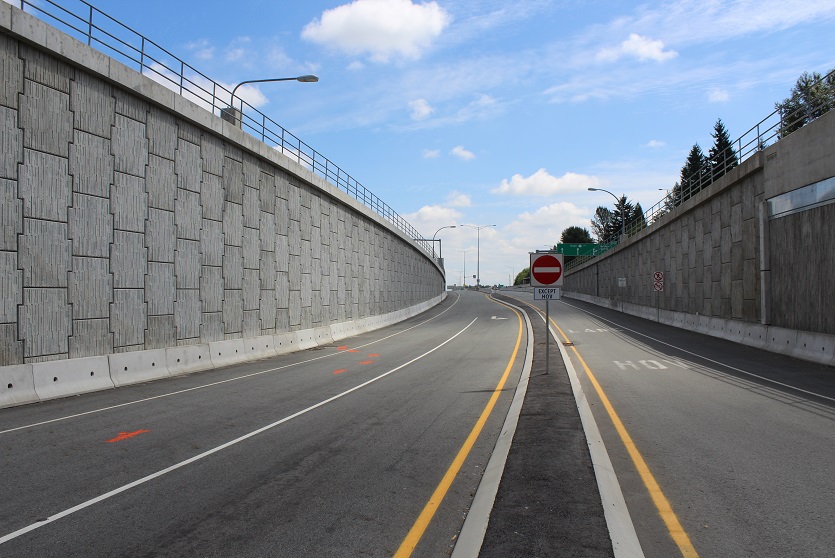
Motorways, railways and industrial facilities produce continuous noise and vibration that affect the people living and working nearby. Noise mitigation places a physical screen between the source and the receivers, so that sound is blocked, absorbed or reflected away from residential areas, schools, offices and public spaces.
With environmental noise limits becoming stricter and infrastructure increasingly built close to urban areas, noise barriers have become a standard part of transport and industrial projects. They need to be acoustically effective, durable and well integrated into their surroundings.
Constraints of controlling traffic and industrial noise
- Regulatory noise limits
Projects must reach the noise reduction levels required by environmental authorities.
- Wind and exposure
Tall, slender walls are subject to high wind loads along open corridors.
- Ground movement
Expansion, contraction and frost heave can damage long, continuous walls.
- Variable foundation conditions
Barriers often run along embankments or poor soils where deep foundations are costly.
- Tight alignments
Roadside offsets, existing utilities and limited space restrict the barrier position.
- Visual impact
Long walls are highly visible and must fit into urban and rural landscapes.


Reducing noise exposure along infrastructure corridors
A noise barrier interrupts the direct path between a noise source and the receiver. Its height and length create an acoustic shadow behind the wall, while its surface either reflects sound back towards the source or absorbs part of it to avoid reflections on the opposite side.
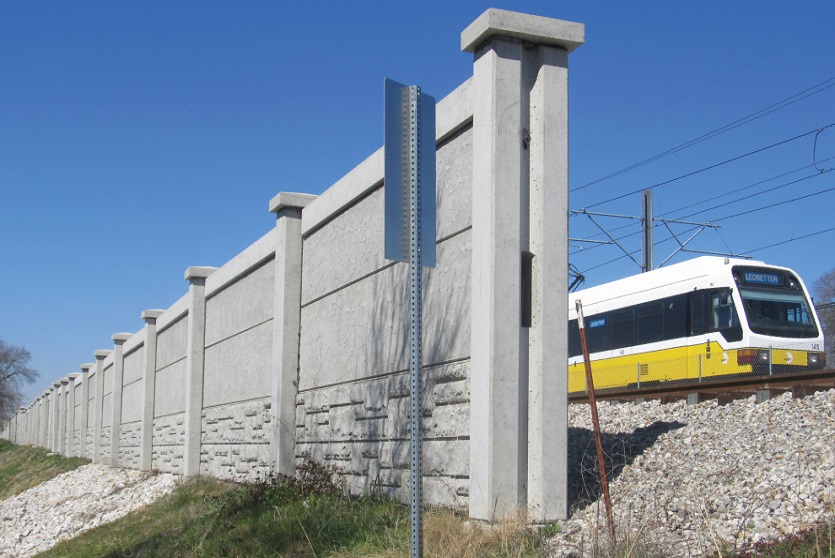
Precast concrete is widely used for noise walls because it combines mass, durability and a wide choice of surface textures. Barriers can be built as free-standing walls placed on a shallow footing, such as free-standing precast noise barriers where precast panels are stacked between posts embedded in the ground. Sound absorbing faces can be added where reflected noise is a concern.
Noise mitigation is used along motorways and railways, around industrial and logistics sites, and at the edge of residential and commercial developments, for both permanent and relocatable installations.
Common noise barrier arrangements
- Free-standing noise walls
Self-supporting precast panels placed on a levelling or gravel pad, with no deep foundation. They can be dismantled and relocated.
- Post-and-panel noise walls
Precast panels stacked between posts set in shallow shafts. Post spacing and alignment can be adjusted on site.
- Sound absorbing barriers
Walls with an absorptive face that reduces reflected noise, suited to narrow corridors or barriers on both sides of a road.



Parameters behind effective noise barrier design
- Required noise reduction: Target levels and receiver locations define the barrier height, length and position.
- Reflective or absorptive face: Barriers on both sides of a road, or close to buildings, may need sound absorbing panels.
- Wind loads: Exposure and wall height govern panel thickness, connections and stability.
- Foundation characteristics: Soil conditions decide between a shallow, self-supporting wall and a post-and-panel solution on embedded supports.
- Ground movement: Joints that tolerate rotation and vertical movement limit damage from frost heave and thermal effects.
- Alignment and installation: Road offsets, curves and site access affect panel layout and construction method.
- Appearance: Textures on both faces and an Architectural finish help integrate the wall into its surroundings.
- Service life and reuse: Permanent, temporary or relocatable use influences the choice of structure.