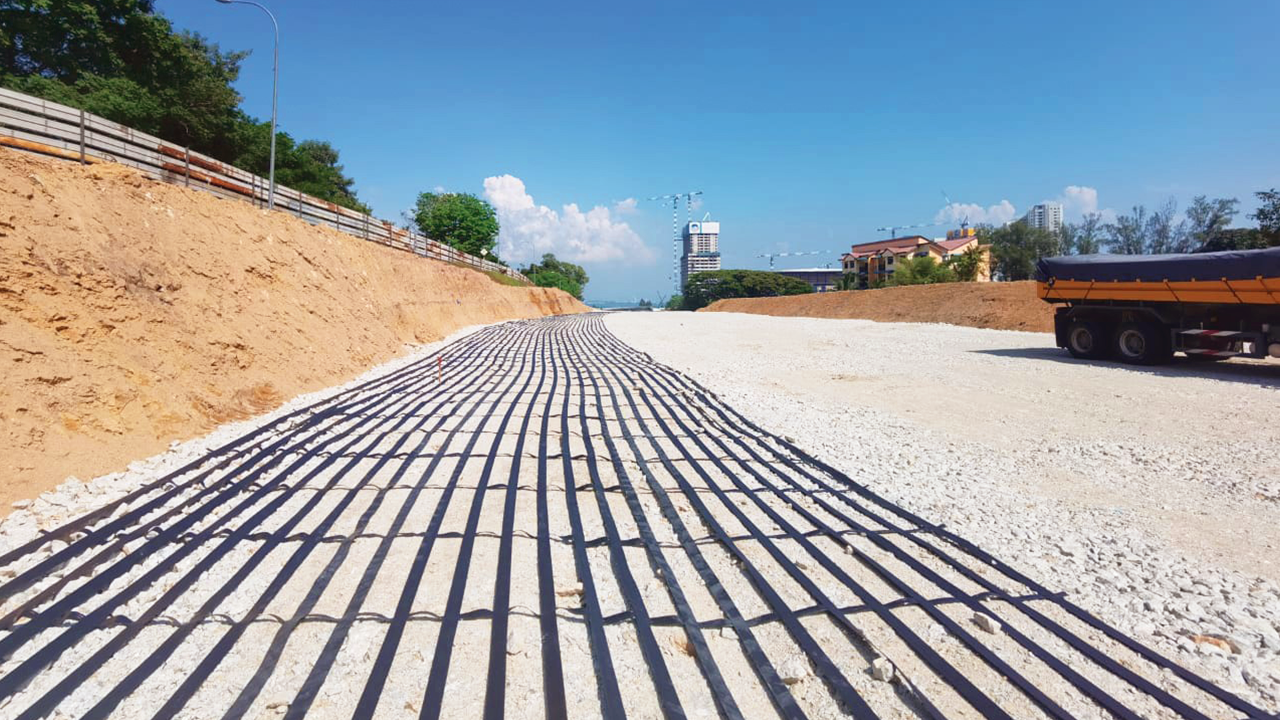
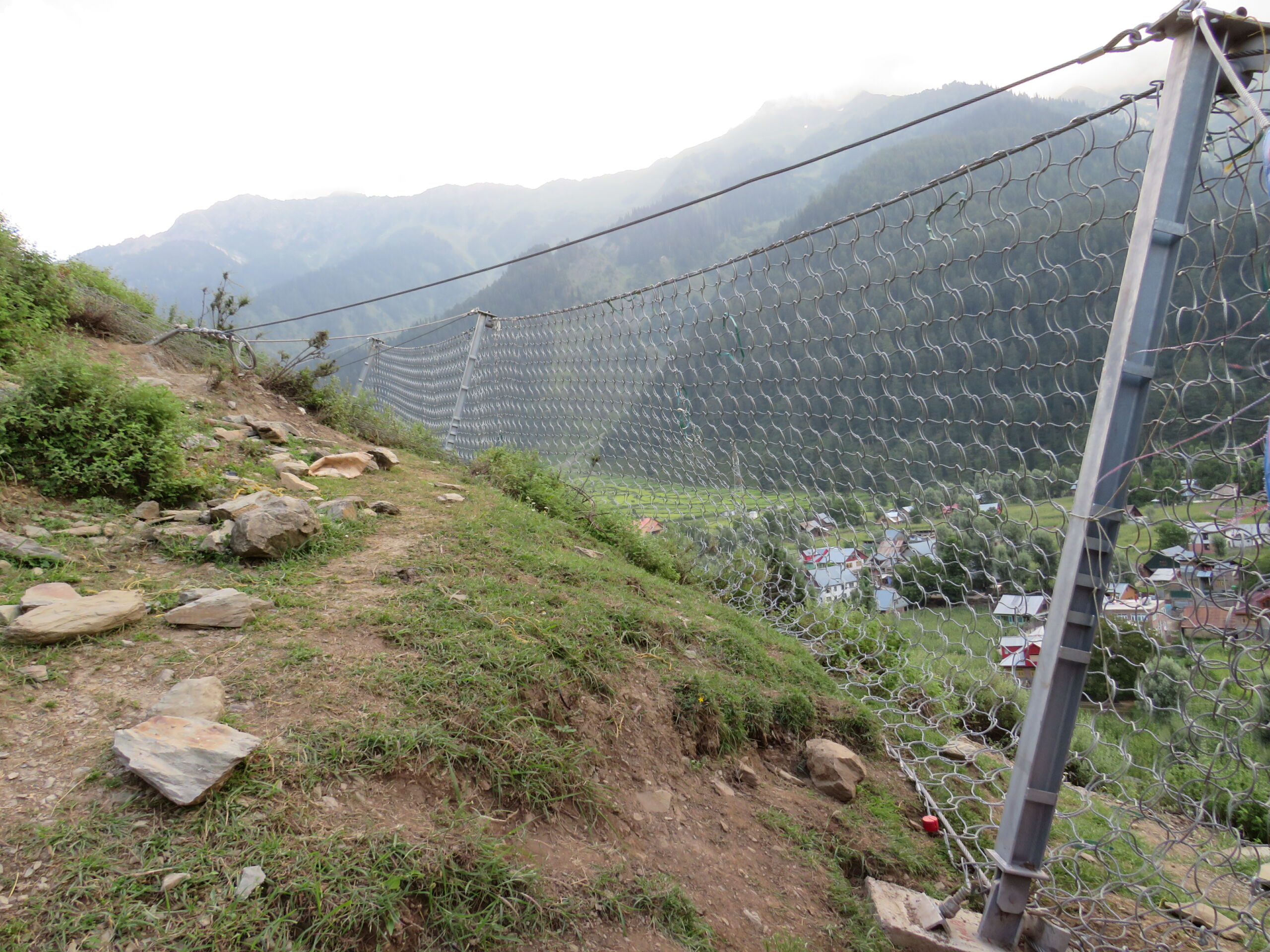
Retain unstable rock and debris directly on the slope before movement occurs
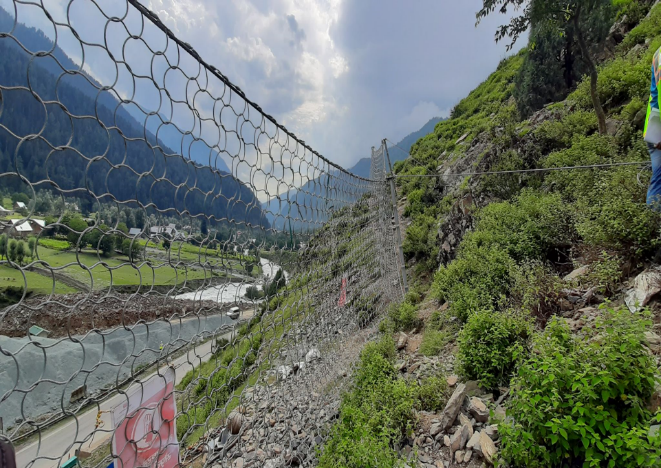
Protective nets are engineered solutions designed to stabilize unstable slopes and rock faces before stones and debris can detach and threaten nearby infrastructure. High-tensile steel mesh is installed directly against the slope and secured through structural anchoring to retain unstable materials at the source.
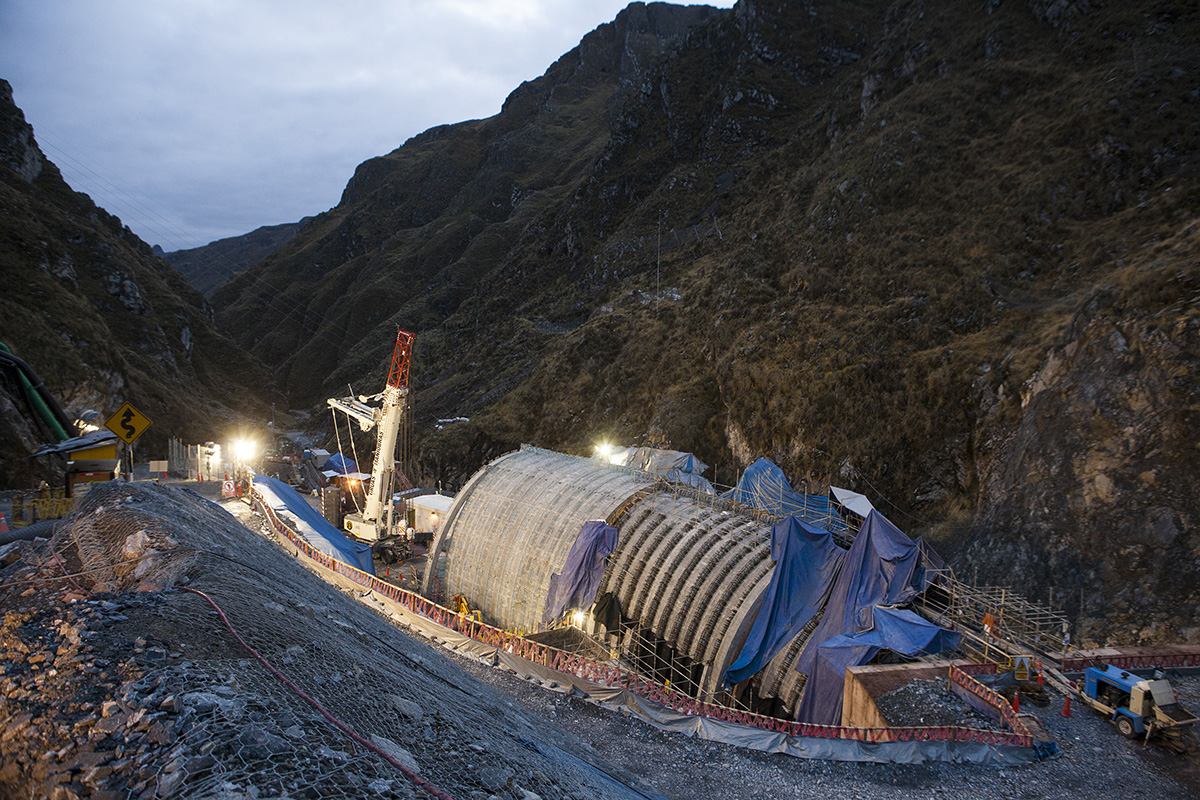
Designed for transportation corridors, hydraulic infrastructure, mining operations, industrial facilities and urban developments, protective nets provide adaptable and durable protection across a wide range of geological and topographical conditions.
Why protective nets:
- Prevent material movement at the source
- Stabilize unstable slopes and rock faces
- Reduce rockfall and debris generation
- Protect infrastructure through proactive slope management
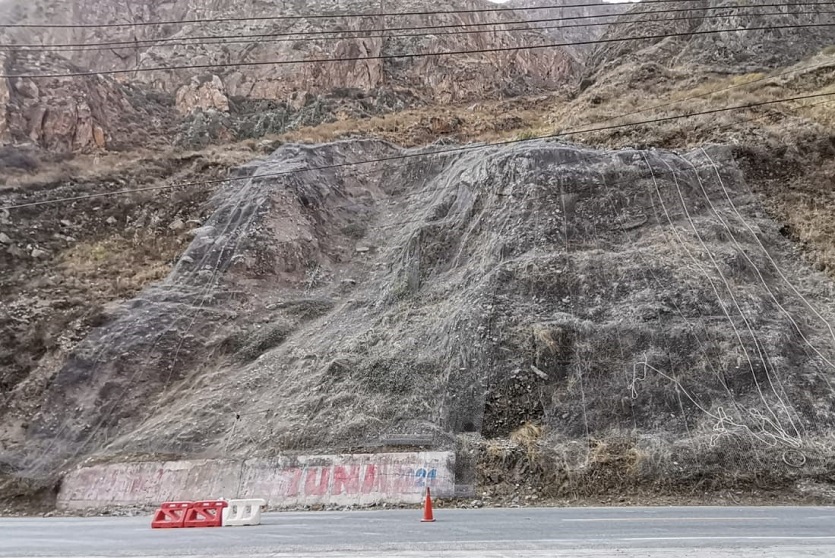
Managing unstable slopes before material movement occurs
Weathering, erosion, water infiltration and geological discontinuities can progressively weaken slopes and rock faces. Loose stones and unstable debris may eventually detach, creating significant risks for roads, railways, hydraulic structures, industrial facilities and nearby developments.
Rather than intercepting materials after they begin to fall, project owners and engineers may need to address instability directly on the slope. The challenge is to retain potentially unstable materials while adapting the protection solution to irregular terrain, varying block sizes and difficult site access. Common project challenges:
- Unstable slopes and weathered rock faces
- Potential detachment of stones and debris
- Progressive deterioration of exposed surfaces
- Irregular terrain and complex slope geometries
- Variable rock block sizes and geological conditions
- Limited or difficult site access
- Infrastructure located directly below unstable slopes
- Long-term protection and durability requirements
Designed to retain unstable materials directly on the slope
Protective nets use flexible high-tensile steel mesh installed in direct contact with natural or prepared slope surfaces. Structural anchors and pins secure the mesh to the ground, helping retain loose stones and unstable debris before they can detach and gain momentum.
The mesh conforms to irregular slope geometries and distributes loads toward the anchoring points. Its layout, opening size, strength and anchoring arrangement can be adapted to the identified instability mechanisms and geological conditions of each project.
For more demanding environments, multi-strand wire rope mesh can provide enhanced containment for larger or less predictable rock blocks. Drapery configurations can also be used where controlled guidance of detached materials along the slope is more appropriate than full surface retention.
Key technical capabilities:
- High-tensile steel mesh installed against the slope
- Structural anchoring and pinning
- Active control of unstable materials at the source
- Flexible adaptation to irregular slope geometries
- Multiple mesh strengths and opening sizes
- Project-specific design based on geological conditions
Available slope retention solutions
Protective nets can be configured according to slope geometry, expected block size, geological conditions and the identified mode of instability.
- Rectangular mesh
Low and medium tensile mesh designed to retain unstable surface materials across varied slope conditions.
- HPN mesh
Flexible mesh developed for slope retention applications requiring moderate tensile and puncture resistance.
- Sigma mesh
High-tensile mesh combining elevated strength with controlled deformation for demanding stabilization conditions.
- ISOFIX Orthofix
Wire rope netting designed for larger unstable blocks and demanding rock slope geometries.
- Omega net
Flexible wire rope netting combining high containment capacity with close adaptation to irregular terrain.
- Drapery solutions
Guide detached material along the slope toward controlled collection areas while limiting uncontrolled trajectories.
Our solutions suit severall applications to: RetainCrossProtectStrengthen