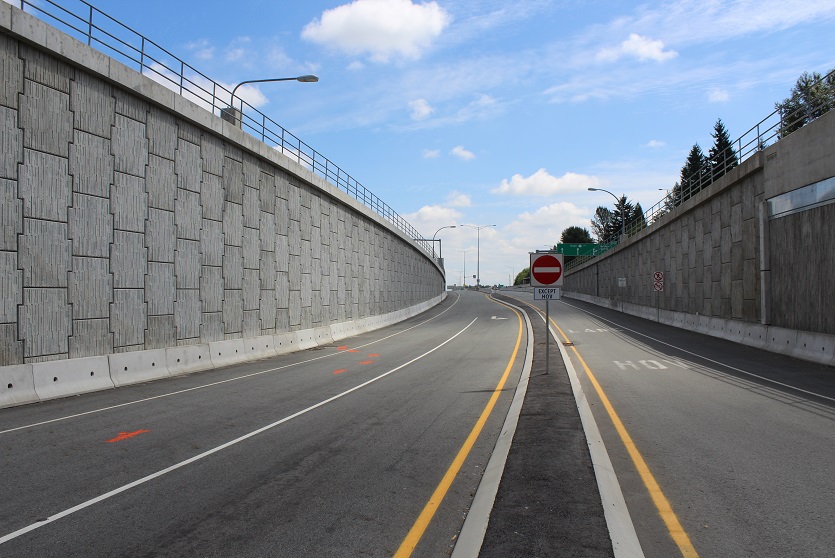
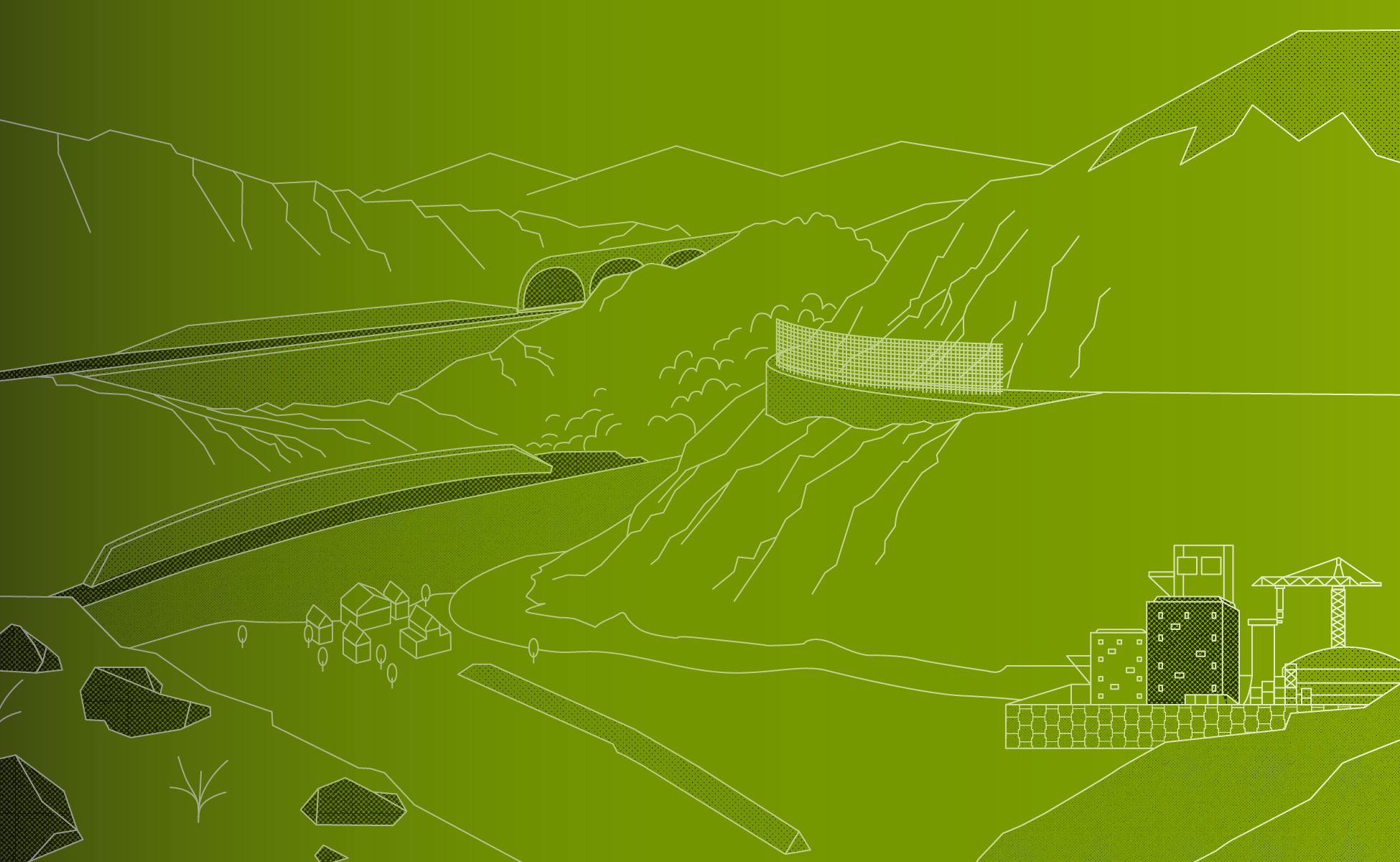
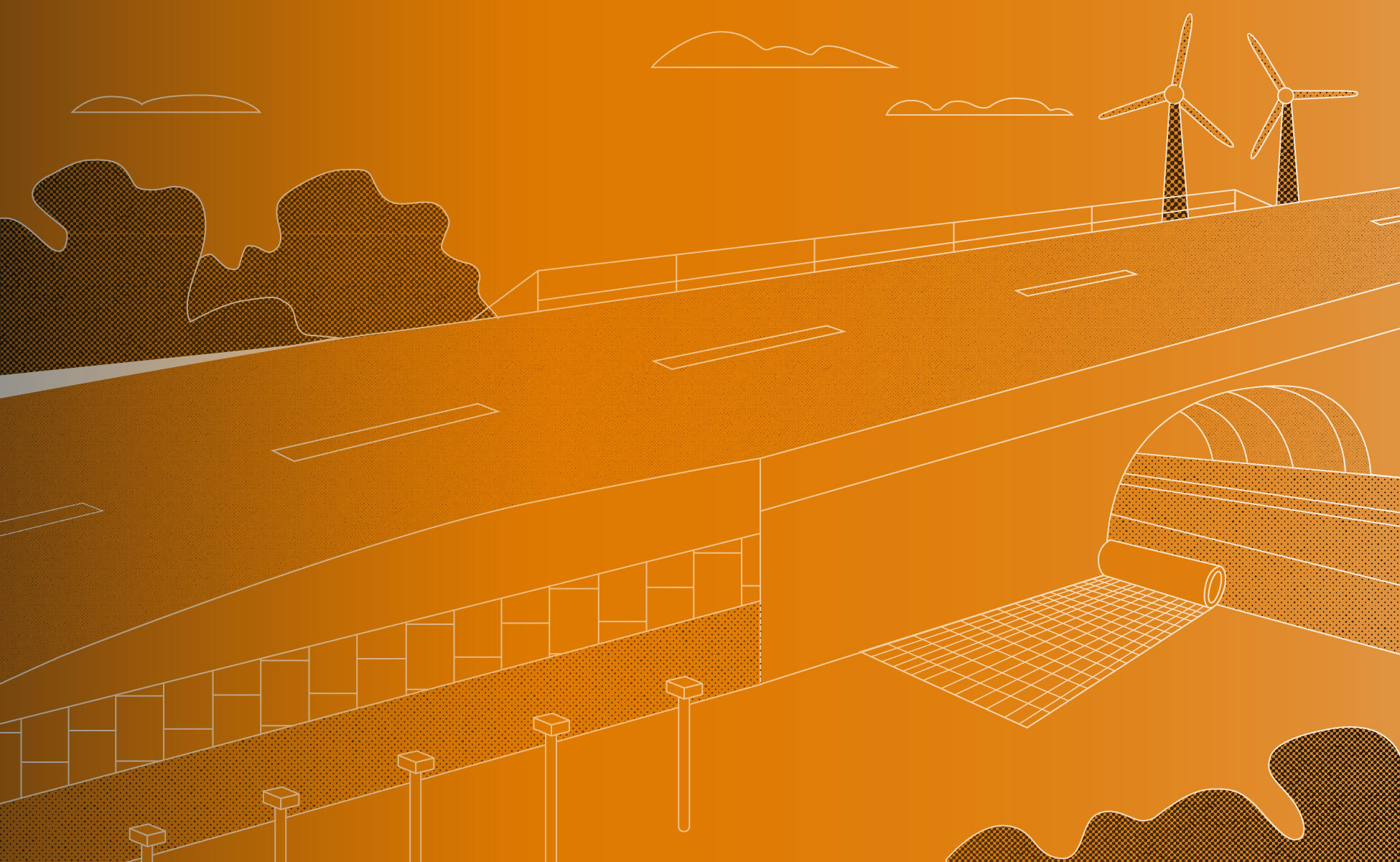
Roads, railways, access tracks and working platforms all rest on layers of soil and aggregate that must carry repeated traffic loads. When the ground beneath is weak, or the granular layers are not stiff enough, the surface ruts, deforms and loses its geometry, sometimes after only a few months of service.
Stabilization strengthens these layers so they spread loads better and keep their shape over time. It allows infrastructure to be built on poor ground, reduces the thickness of excavation and imported aggregate, and limits maintenance throughout the service life.
Problems caused by weak ground under traffic
- Low bearing capacity
Soft or wet subgrade soils cannot support construction traffic or permanent loads without excessive deformation.
- Rutting and surface deformation
Repeated wheel loads progressively displace granular layers and create ruts and depressions.
- Loss of track geometry
On railways, settlement and degradation of track bed layers require frequent realignment.
- Thick aggregate layers
Conventional design compensates for weak ground with deep excavation and large volumes of imported aggregate.
- Remote or difficult sites
Mines, wind farms and greenfield sites need access roads that can be built quickly on raw ground.
- Maintenance and carbon impact
Frequent repairs, aggregate transport and excavation increase both operating costs and emissions.
Strengthening the layers beneath roads, tracks and platforms
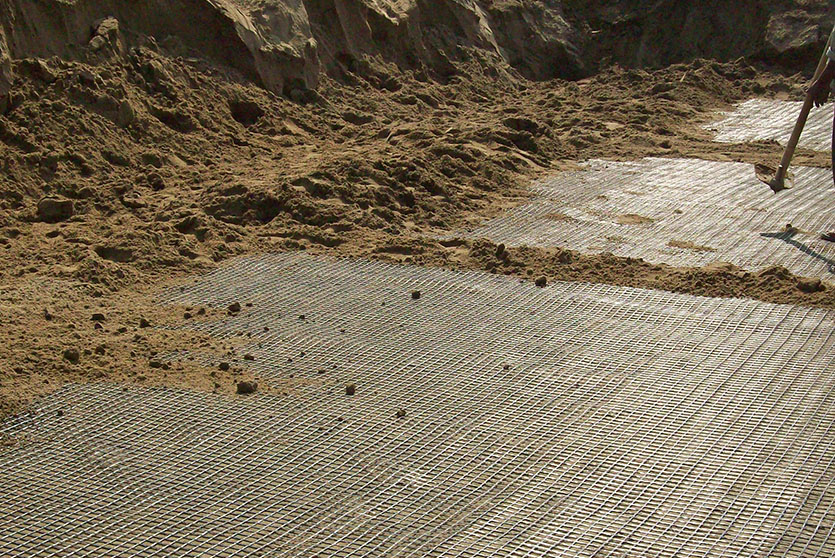
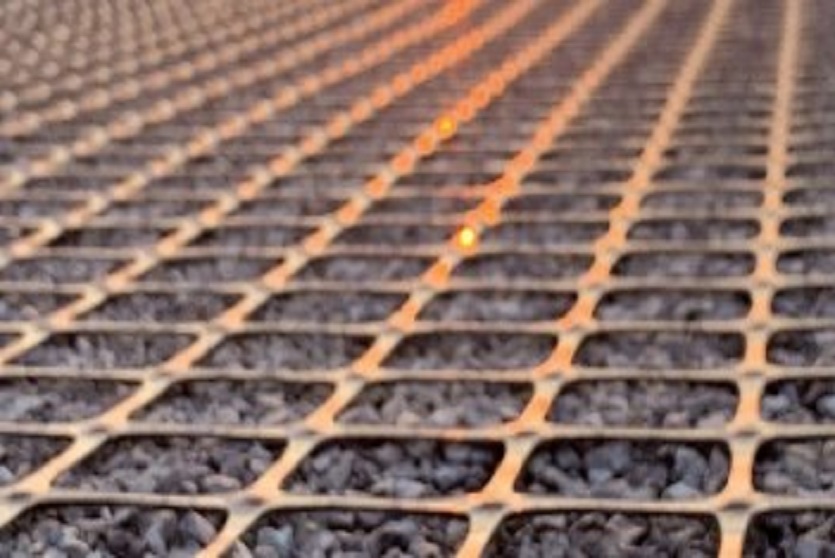
Stabilization acts on the layers placed directly under the traffic surface: the subgrade, the subbase and the base course. Geosynthetic reinforcement placed within or under these layers interlocks with the aggregate and forms a stiffer composite layer. Loads are spread over a wider area, lateral movement of the aggregate is restrained and deformation under traffic is reduced. Biaxial geogrids such as ArmaGrid are commonly used for this purpose.
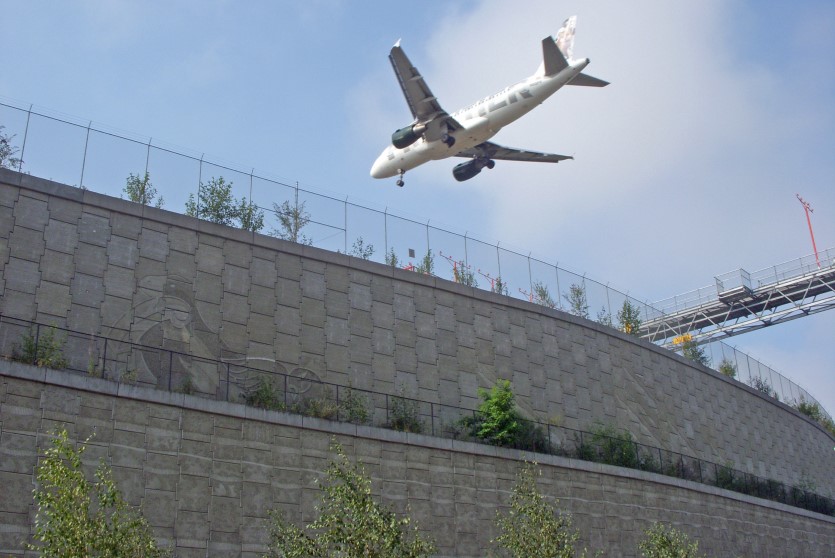
This differs from basal reinforcement, which addresses the overall stability and settlement of an embankment built on soft soils. Stabilization focuses on the performance of the near-surface layers under repeated loading.
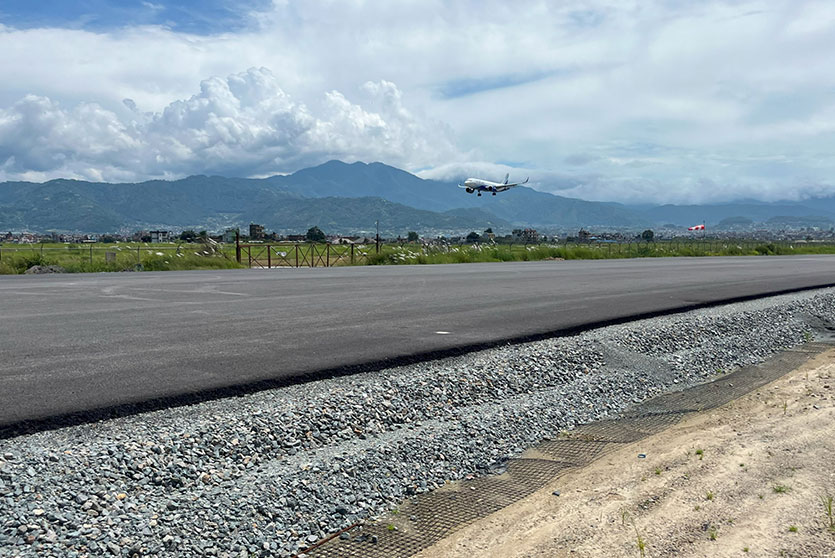
Stabilization is used for permanent roads and motorways, railway track beds, airport runways and aprons, port yards and logistics platforms. It is also used for temporary access roads and working platforms on construction and mining sites. Depending on the layer being treated, it falls into two main types: subgrade stabilization and pavement stabilization.
Subgrade and pavement stabilization
- Subgrade stabilization
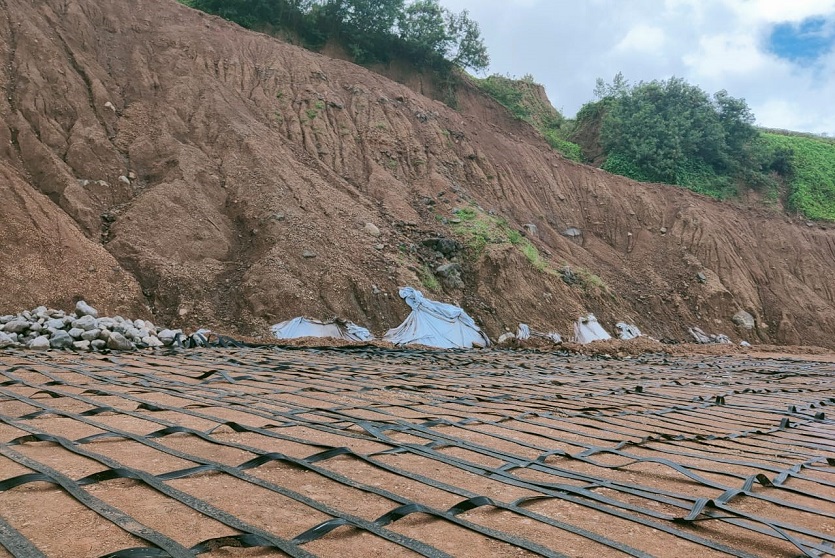
Subgrade stabilization improves the performance of the natural ground or the first fill layer on which the structure is built. A geosynthetic layer placed at the interface between weak subgrade and aggregate separates the two materials and increases the bearing capacity of the platform.
It is used where the existing ground is soft, wet or variable: working platforms for cranes and piling rigs, temporary and permanent access roads, haul roads on mine sites and the foundation of new roads or railways. The key design points are the strength of the subgrade, the loads of construction and operating traffic, and the required thickness of the aggregate layer. Geogrids such as ArmaGrid are used to reduce excavation and imported fill.
- Pavement stabilization
Pavement stabilization reinforces the granular layers that support the surface course of roads, runways and yards, or the ballast and sub-ballast of railway tracks. The reinforcement restrains lateral movement of the aggregate under repeated loading, so the layers keep their stiffness and thickness for longer.
It is used to extend the service life of flexible pavements and unpaved roads, to reduce the thickness of base layers for the same performance, and to limit ballast degradation and settlement on railways. The key design points are traffic volume and loads, aggregate quality, and the target service life and maintenance intervals. Geogrids such as ArmaGrid are placed within the base course or track bed layers.
Factors that set stabilization requirements
- Subgrade strength: The bearing capacity of the existing ground determines the need for stabilization and the thickness of the layers above.
- Traffic loads: Axle loads, number of passes and traffic type (construction, road, rail or heavy industrial) define the performance required.
- Service life: Temporary access roads and permanent infrastructure require different levels of durability.
- Aggregate type and availability: The grading and quality of the aggregate influence interlock with the reinforcement and the volume to import.
- Water and drainage: Groundwater and poor drainage weaken the subgrade and must be addressed in the layer design.
- Deformation limits: Acceptable rutting on roads or track geometry tolerances on railways set the stiffness target.
- Excavation and carbon reduction: Reducing layer thickness lowers excavation, aggregate transport and emissions.
- Construction conditions: Site access, weather and installation speed affect the choice of method.